“Perhaps now more than ever, the idea of coming into direct contact with radically different viewpoints– political perspectives, policy approaches, ethical stances– feels more real, more present, and more threatening than ever before” – Alex Rose
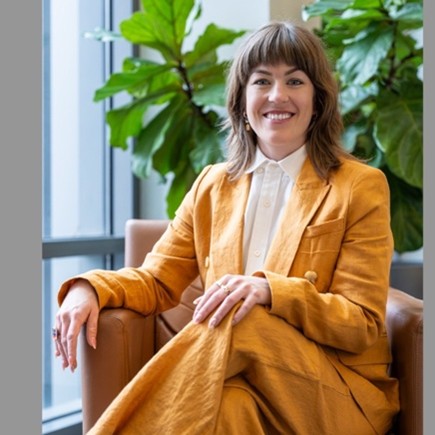
In our third webinar, Working Across Difference, social worker and Rotary Peace Fellow, Alexandra Rose (UNC MSW ’24) shared powerful insights from her international work to bring communities together toward a common goal.
To ground us in our history and inspire our work, the webinar began with a clip about the organizing work of Durham civil rights activist, Ann Atwater, and C.P. Ellis, a former member of the KKK. Despite their deep differences, Ann and C.P. realized that they both wanted better educational opportunities for their children and worked together to make that happen. You can view the clip here: https://www.youtube.com/watch?v=-KzSaK1sUIA&t=30s
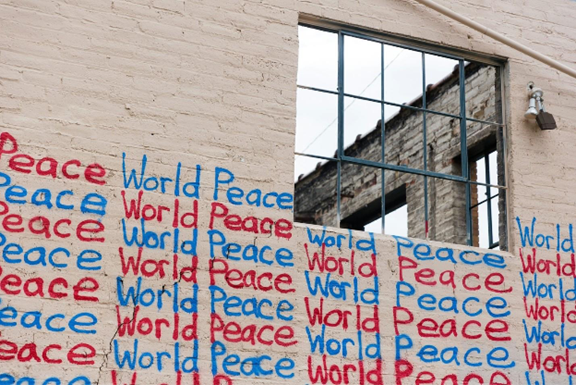
At the start of her talk, Alex shared that working across difference can encompass a range of concepts, including cultural humility, intercultural competence, intellectual humility, emergent strategy, conflict transformation, and peace-building. She focused on peace-building with two key examples: 1) navigating difference at the practitioner level through a course-based activity, and 2) fostering peace at the program level through her work on the island of Nauru. She introduced the concepts of negative and positive peace; negative peace as the absence of direct violence, and positive peace, in the words of Rev. Dr. Martin Luther King Jr. as “not merely the absence of tension, but the presence of justice.”
Alex went on to share an example from her UNC Global Studies course, Theory and Practice of Conflict Transformation, which she described as a simple but difficult assignment. In this assignment, students were asked to spend 20 minutes engaging with content that deeply challenged their beliefs, values, or worldview by listening to or watching a perspective they strongly disagreed with . The participants were asked to track their emotional, physical, and cognitive responses and notice how their body and mind reacted in the moment. Students recounted feeling a whirlwind of emotions including anger, frustration, defensiveness, disappointment, and sadness. Students had impulses to smash something, to stop listening, to counter the arguments. The goal was to become aware of those moment-to-moment experiences that challenge us and increase our capacity to find healthy ways to tolerate them. Practicing this skill can help us to engage with difference more intentionally and less habitually increasing our chances of finding mutual connection and influence. This also helps us to stay in the window of tolerance to be able to create the interpersonal conditions necessary to work proactively across difference. She concluded her first example by noting, “when communication is rooted in intentionally calm and clear interactions, repeated with others over time, working across difference is likely to be much more effective.”
Alex’s second example was working across difference at the program level, based on her experiences with refugees and asylum seekers on the island of Nauru. While Nauru was once the richest country per capita in the world, it is now one of the poorest and at the time was experiencing increasing tensions between different refugee and asylum seeker groups and Nauruan locals. Between 2015-2017 there were many international aid organizations on the ground to support refugees and asylum seekers but none for the local population. Her charge was to help the various communities come together. Toward this end, residents wanted to be able to live together, there were some informal conflict resolution mechanisms already in place, there was a deep desire to experience peace and stability after experiencing displacement and war. There was also cross-cultural appreciation and respect for religion and religious leaders. Her team’s aims were to develop spaces for dialogue, to increase understanding, to acknowledge and see each other’s humanity through strengthened community ties, to develop informal spaces to support the shared responsibility for peace, and to up-skill the community to respond generatively to conflict and difference. Alex shared a fascinating asset mapping activity they led in which each community engaged in a process of defining their assets and then honing each list down to those unique assets that could serve the whole community. For example, the Burmese community had skills in growing produce and gardening while the Iraqi community had culinary skills and the Pakistani community had skills in catering for large crowds. Skills that they were able to draw on to work together towards building community and understanding.
Some key practices and strategies that Alex shared included:
- Train for this- don’t start with the most difficult conversations or people
- Start by challenging yourself in small ways- work on increasing tolerance to discomfort and ambiguity
- Try the class assignment at home or in your team and see what you notice
- Foster dialogue spaces that enable seeing each other’s humanity before launching into difficult conversations
- In moments where peace building is too much- just focus on avoiding war
Want to dig in deeper? View the full talk here: https://www.youtube.com/watch?v=Eo7ftdc2D-4 and check out Alex’s resource list below.
Toward Psychologies of Liberation by Mary Watkins & Helene Shulman
The Wild Edge of Sorrow: Ritual of Renewal and the Sacred Work of Grief by Francis Weller
Trauma and recovery: The aftermath of violence—from domestic abuse to political terror by Judith Herman
Healing Resistance: A Radically Different Response to Harm by Kazu Haga
Emergent Strategy by Adrienne Maree Brown
Podcast episode: Supercommunicators – How to Have the Hardest Conversations
Hidden Brain podcast episode: Win Hearts, Then Minda + Your Questions Answered on Identity and “Covering”